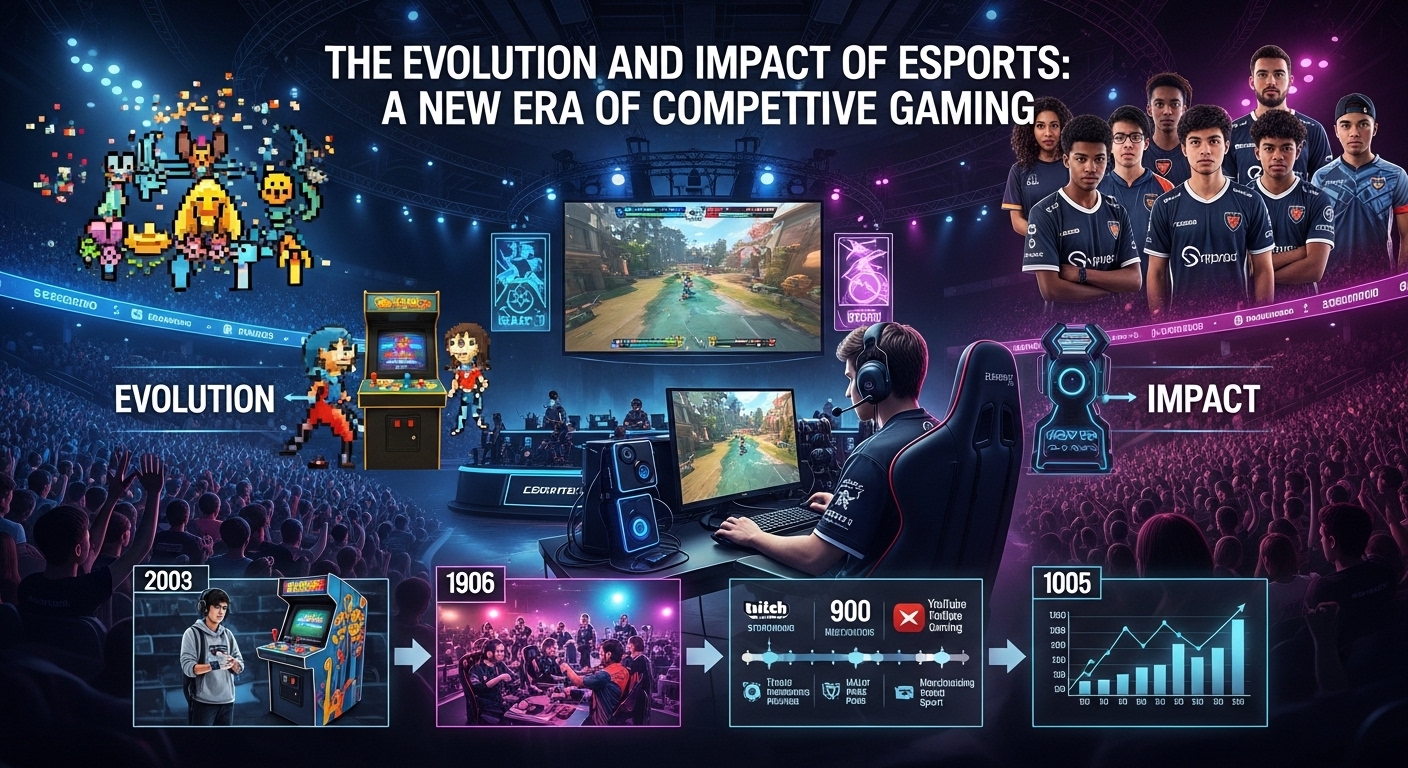
Esports, or competitive gaming, has rapidly evolved from a niche hobby into a global phenomenon. What started as casual competitions among friends or small online communities has now become a fully-fledged professional industry, complete with organized leagues, massive tournaments, celebrity players, and millions of spectators worldwide. In this blog post, we will explore the rise of esports, the impact it has on society, its economic potential, the lives of professional gamers, and what the future holds for this ever-expanding digital sport.
The Origins of Esports: From Arcades to Online Arenas
The history of esports dates back to the 1970s and 1980s when arcade games like Space Invaders, Pac-Man, and Donkey Kong dominated entertainment venues. These arcades became informal competitive spaces, where players tested their skills against friends and strangers. Local high-score competitions became a popular way for gamers to measure their abilities, though these early competitions were relatively small and informal.
The rise of personal computers and home consoles in the late 1980s and 1990s marked a turning point. Games such as Street Fighter II, StarCraft, and Quake began to cultivate competitive communities on a broader scale. Tournaments started to offer modest cash prizes, drawing attention from serious players and setting the stage for what would evolve into professional esports.
South Korea played a pivotal role in the development of modern esports. In the late 1990s, internet cafes, known as PC bangs, became central hubs for competitive gaming. StarCraft, in particular, emerged as a national pastime, with professional players achieving celebrity status and televised competitions attracting large audiences. This period cemented the idea that competitive gaming could be a legitimate form of entertainment.
The Rise of Online Gaming and Global Competitions
As internet infrastructure improved globally in the early 2000s, competitive gaming shifted to online platforms. Multiplayer games such as Counter-Strike, Warcraft III, and later League of Legends and Dota 2, allowed players from around the world to compete in real time. Online tournaments became more organized, drawing in larger audiences and setting the stage for international competitions.
The creation of leagues and formal tournaments was a game-changer for esports. Organizations like the Electronic Sports League (ESL) and Major League Gaming (MLG) established professional structures for competitive gaming. Tournaments began to offer substantial cash prizes and attract sponsors, creating an ecosystem similar to traditional sports leagues.
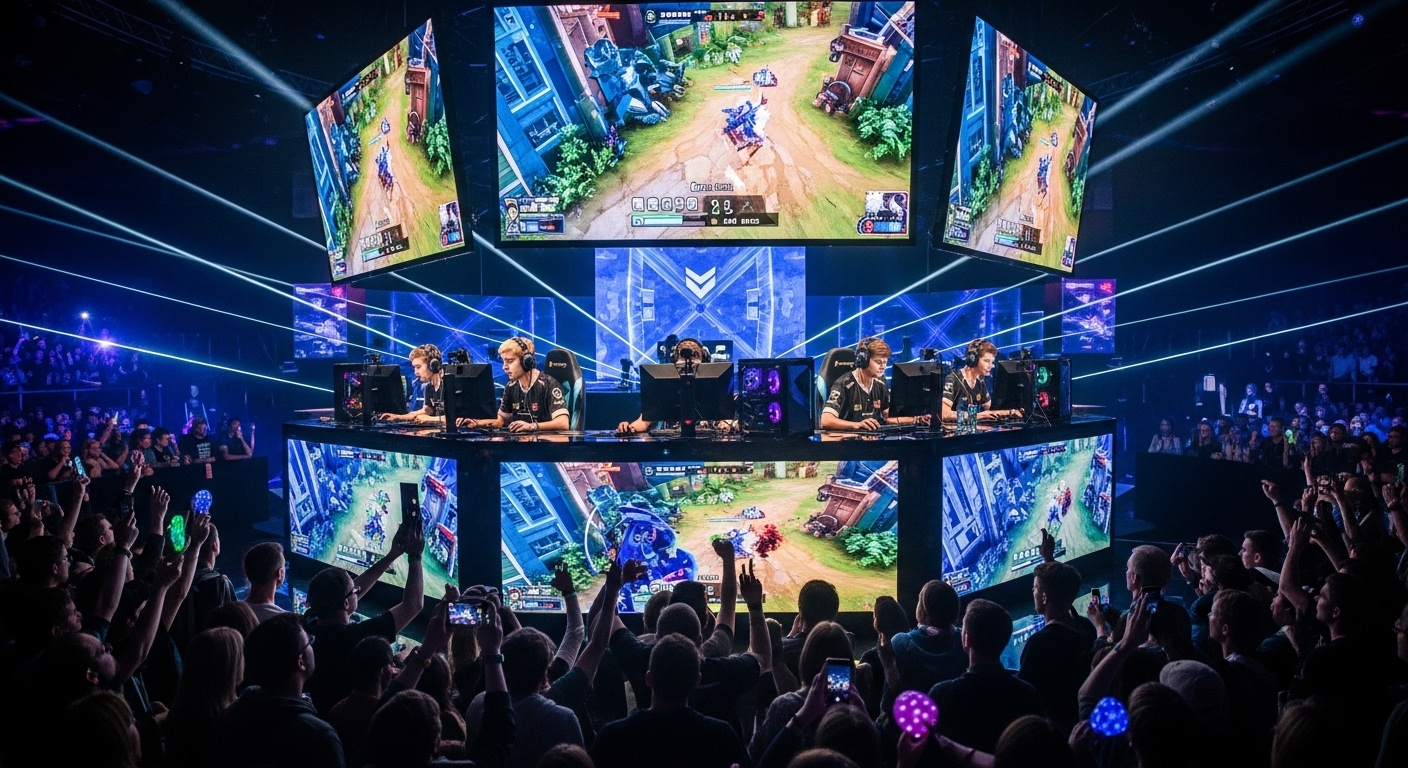
Esports quickly grew beyond local or national boundaries. International tournaments such as The International for Dota 2 and the League of Legends World Championship became global spectacles, attracting millions of viewers. These events highlighted the potential of esports as a worldwide entertainment medium, drawing fans from diverse cultural backgrounds and uniting them through shared experiences.
Streaming Platforms: Connecting Players and Audiences
The rise of streaming platforms revolutionized esports, making it easier for players and fans to connect. Platforms such as Twitch and YouTube Gaming allowed professional players to broadcast their gameplay live, reaching audiences of millions. Live streams not only provided entertainment but also created an interactive community where viewers could engage with players through chat and social media.
Streaming transformed esports into a spectator sport. Fans could follow their favorite players, watch tournaments live, and even learn gaming strategies from professionals. This shift allowed esports to build a global fan base, increase visibility, and create new revenue streams through subscriptions, advertisements, and donations.
The streaming culture also helped professional gamers gain celebrity status. Players like Tyler “Ninja” Blevins, Lee “Faker” Sang-hyeok, and Johan “N0tail” Sundstein became household names, transcending the gaming world and entering mainstream media. This exposure has helped esports gain recognition as a legitimate form of entertainment, comparable to traditional sports.
Economic Growth: Sponsorships, Prize Money, and Franchise Models
The esports industry has experienced explosive economic growth over the past decade. Revenue streams include tournament prize pools, sponsorships, advertising, merchandise sales, and media rights. Major corporations have taken notice, investing heavily in esports as a marketing and brand-building opportunity. Companies such as Intel, Red Bull, and Nike sponsor teams and tournaments, creating lucrative partnerships that drive the industry forward.
Tournament prize pools have grown to unprecedented levels. Events like The International offer multi-million-dollar prizes, motivating players to compete at the highest level. The increasing size of these prize pools has made esports a viable career option for talented gamers, attracting new talent and expanding the competitive pool.
The franchise model has further professionalized esports. Leagues like the Overwatch League and League of Legends Championship Series have adopted a franchise system similar to traditional sports, where teams buy permanent slots in the league. This model encourages investment in infrastructure, player development, and long-term growth, helping stabilize the industry and provide sustainable revenue.
Professional Gamers: The Life of a Competitor
Professional esports players are the cornerstone of the industry. Becoming a pro gamer requires extraordinary dedication, skill, and discipline. Players typically practice for six to twelve hours a day, focusing on mechanics, strategy, and teamwork. Competitive gaming demands quick reflexes, critical thinking, and the ability to perform under pressure.
Despite the glamorous appearance, professional gaming comes with challenges. The career span of a pro gamer is often short, with many retiring in their mid-20s due to burnout or declining performance. Maintaining mental and physical health is crucial, as the demands of practice, travel, and competition can take a toll.
Nevertheless, successful pro gamers enjoy significant rewards. In addition to prize money, they earn income from streaming, sponsorships, merchandise, and appearances. Top-tier players can make millions of dollars annually, and many transition into coaching, content creation, or management roles after retiring from active competition.
Esports as a Global Phenomenon
Esports transcends borders, cultures, and languages. Games like League of Legends, Dota 2, and Counter-Strike have vibrant communities across North America, Europe, Asia, and South America. International tournaments draw millions of viewers, showcasing the global reach of competitive gaming.
Regional leagues have also contributed to the growth of esports. Competitions such as the LCK in South Korea, LCS in North America, and the European Championship have developed local fan bases while feeding talent into international events. This structure mirrors traditional sports, with local competitions serving as stepping stones to global championships.
The international nature of esports fosters community and collaboration among players and fans. Online forums, streaming platforms, and social media allow fans to connect across continents, share experiences, and celebrate their favorite teams. Esports communities are diverse, inclusive, and often more interconnected than those of traditional sports, emphasizing shared passion over geographic boundaries.
The Future of Esports: Innovation and Mainstream Integration
The future of esports promises continued growth and innovation. Emerging technologies such as virtual reality, augmented reality, and 5G connectivity have the potential to transform both gameplay and spectator experiences. VR and AR can create immersive competitions, while faster internet speeds will enable seamless online tournaments without latency issues.
Esports is also increasingly intersecting with traditional sports. Professional sports organizations are investing in esports teams, blurring the lines between digital and physical competition. This crossover expands the audience for esports and further legitimizes competitive gaming as a mainstream entertainment industry.
Inclusion and diversity will continue to shape the future of esports. Efforts to promote women in gaming, create safer online environments, and foster opportunities for players from underrepresented backgrounds will be crucial for long-term growth. A more diverse and inclusive esports community will ensure that the industry remains vibrant and globally relevant.
Conclusion: Esports as a Cultural and Economic Force
Esports has transformed from a niche hobby into a global cultural and economic powerhouse. It offers entertainment, career opportunities, and community connections on an unprecedented scale. With professional leagues, international tournaments, streaming platforms, and technological innovation driving growth, esports is no longer just a pastime—it is a legitimate form of competition and entertainment.
As the industry continues to evolve, it will likely influence mainstream culture, education, and even traditional sports. The rise of esports demonstrates how digital technology can redefine entertainment, connect people across the globe, and create new opportunities for creativity and competition. The world of esports is here to stay, and its impact on society will only continue to grow.